How to Choose the Right Display Protocol for E-Bike & E-Scooter OEM Projects

Introduction — Why Protocol Choice Matters

Choosing the right display protocol is one of the most critical technical decisions in e-bike and e-scooter OEM projects.

The protocol defines how the display communicates with the controller, what data can be shown, and which functions can be controlled.

👉 A wrong protocol choice can lead to display delays, missing functions, or large-scale after-sales issues.

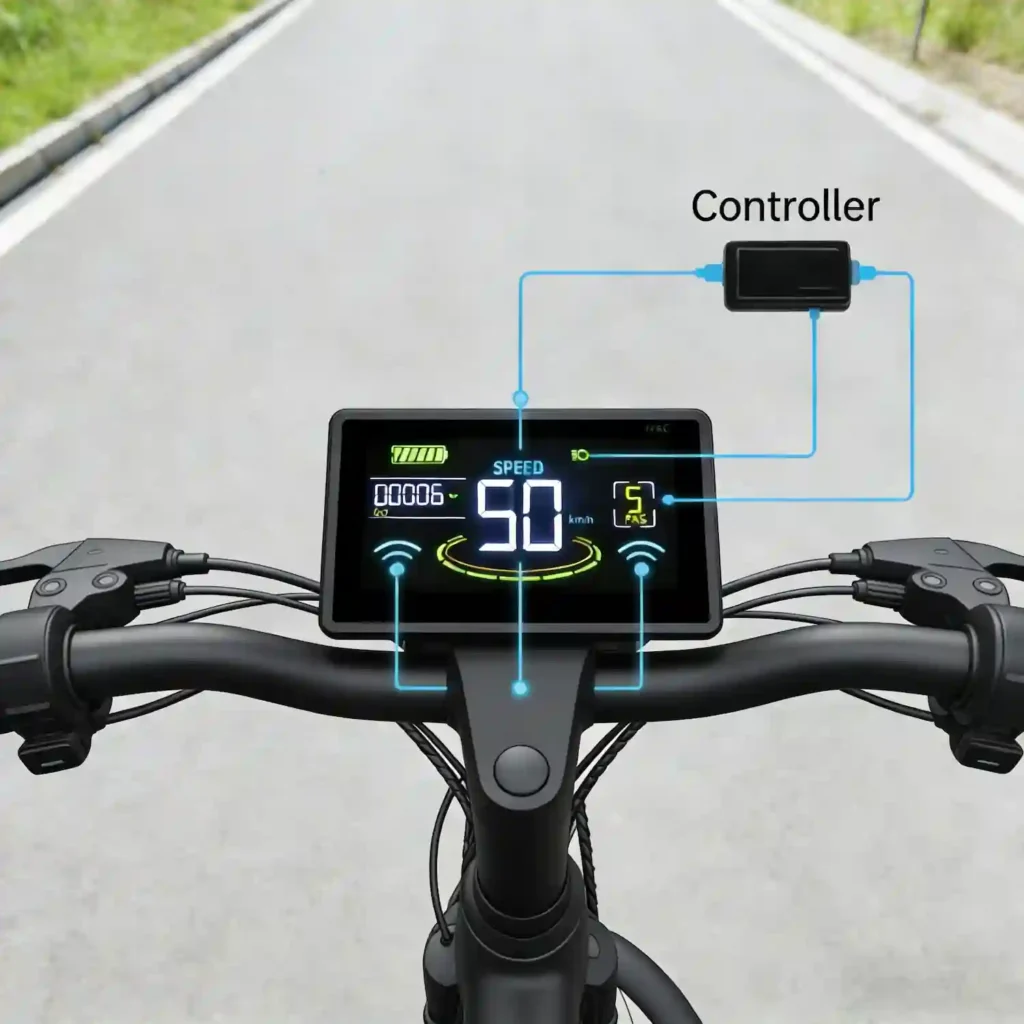
E-bike display communication protocol diagram

Step 1 — Understand the Role of Protocols in Displays

A display protocol acts as the communication language between the display and the controller.

It controls:

  • Speed display

  • Battery level

  • Assist level

  • Riding modes

  • Lights

  • Bluetooth / APP interaction

Simple Analogy

Think of a protocol like a phone charging cable.
If the cable type doesn’t match, power or data transmission won’t work correctly.

Step 2 — Identify Common Display Protocol Options

Before choosing, OEM buyers should understand the main protocol types used today.

Protocol Comparison Table

ProtocolKey FeaturesPhone Cable AnalogyTypical UsePros & Cons
UART No.2Asynchronous serial, high compatibilityMicro USBEntry & mid-level modelsStable, low cost, limited expansion
CAN BusHigh-speed, synchronous, anti-interferenceUSB-CHigh-end OEM & smart bikesPowerful, scalable, higher cost
Custom ProtocolClient-specificLightning / MagSafeLarge OEM customizationFlexible, higher dev cost
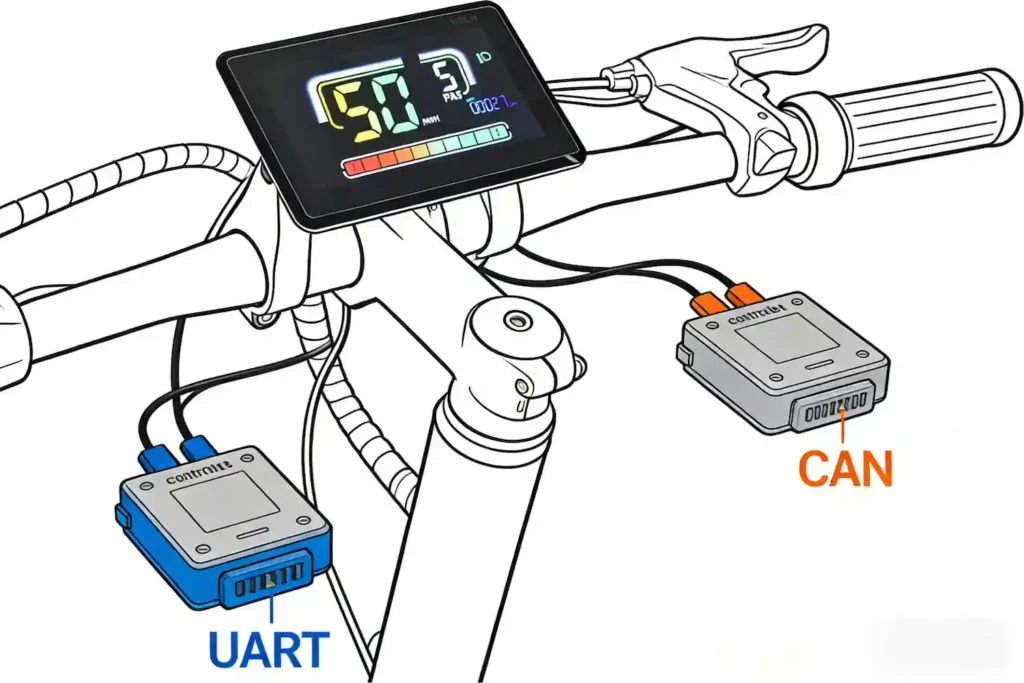
UART vs CAN vs custom e-bike display protocol analogy

Step 3 — Know Why There Is No Universal Protocol

Many OEM buyers ask:
“Why can’t all e-bike displays use one protocol?”

The reasons are practical:

  • Legacy systems: Early controllers used proprietary protocols

  • Feature differences: Entry-level bikes need fewer functions

  • Cost control: Universal compatibility increases firmware complexity

  • No global standard: Different regions, regulations, and ecosystems

👉 Just like smartphones, multiple interfaces coexist because markets demand different solutions.

Step 4 — Evaluate Multi-Protocol Displays Carefully

Multi-protocol displays aim to act like a “universal charging cable.”

Is It Technically Possible?

Yes. Firmware can support multiple protocols and switch during startup.

Real-World Challenges

  • Different command structures

  • More testing and validation

  • Higher development and unit cost

When It Makes Sense

  • Large OEMs

  • High-volume production

  • Premium positioning

For smaller projects, single-protocol displays remain more cost-effective and stable.

Step 5 — Understand How Protocol Mismatch Affects Performance

Many field issues are protocol-related, not hardware defects.

SymptomHidden CauseRecommendationPhone Cable Analogy
Display delayBaud rate mismatchVerify protocol settingsSlow data cable
Screen freezePower & signal interferenceImprove wiringUnstable charging
Missing featuresFirmware mismatchStandardize firmwareNo fast charge support

Step 6 — Choose the Right Protocol Based on Project Type

Entry-Level or Small-Batch OEM

✔ UART No.2
Stable, cost-effective, widely compatible

High-End or Large-Volume OEM

✔ CAN or Custom Protocol
Supports advanced features and future expansion

Premium OEM With Multiple Controller Sources

✔ Multi-protocol display (with higher budget)

👉 Always confirm the controller model and protocol version before mass production.

OEM guide for choosing e-bike display protocol

Conclusion

Choosing the right display protocol is not just a technical decision — it directly impacts system stability, cost control, and after-sales risk.

For B2B and OEM buyers, a clear protocol strategy ensures smoother integration and long-term success.

Leave a Comment

Your email address will not be published. Required fields are marked *